
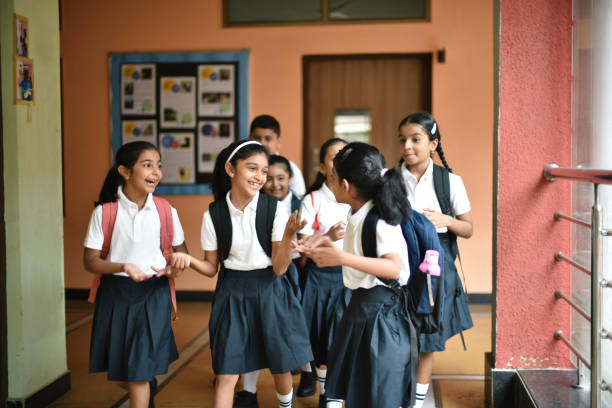
Introduction: Developing Gujarat’s Educational Framework Education is the cornerstone of a country’s development, and state education boards are essential to this revolutionary process. In Gujarat, the Gujarat Secondary and Higher Secondary Education Board (GSHSEB) is leading the charge to develop a strong academic environment and mold young minds. For many years, GSHSEB has served as a guiding light of excellence in education in the state, having been founded with the goal of standardizing and improving secondary and upper secondary education.
Every area of the student’s academic life is impacted by the Board’s diverse role, which includes creating engaging curricula and administering statewide exams. The structure, duties, accomplishments, changes, and the ever-increasing influence of Gujarat’s educational ecosystem are all covered in this article.
An Overview of GSHSEB’s History
In 1972, the Gujarat Secondary Education Act created the Gujarat Secondary and Higher Secondary Education Board. GSHSEB was established to serve as a centralized body in charge of overseeing school-level instruction from Classes 9 through 12 in response to the rising need to administer and improve the state’s academic system.
With its establishment, education underwent a dramatic change from traditional to more contemporary, systematic, and state-monitored. GSHSEB has changed over time from being a traditional testing organization to an organization that develops curricula, implements policies, trains teachers, and ensures quality.
Organization and Structure
GSHSEB functions as a separate entity within the Gujarati government’s Department of Education. The Board is made up of subject matter experts, government representatives, technical workers, and education experts. The Curriculum Committee, Examination Committee, and Evaluation Committee are only a few of its committees.
All of these departments operate in tandem to provide a smooth educational experience for all Board-affiliated schools. Frequent gatherings, discussions, and involvement of stakeholders aid in the development of policies that complement regional sociocultural realities and national educational goals.
Roles and Accountabilities
The following are the main duties of GSHSEB:
Creating and revising textbooks and curricula
administering the Class 10 (SSC) and Class 12 (HSC) board exams
School affiliation and upholding academic standards
Guidelines for hiring and training teachers
Assessment and processing of results
Putting educational changes and initiatives into practice
Encouraging equal and inclusive education
In addition, the Board incorporates National Education Policy (NEP) directives at the state level and supervises the execution of national programs like the Rashtriya Madhyamik Shiksha Abhiyan (RMSA).
Innovative Pedagogy and Curriculum Design
The GSHSEB-developed curriculum is comprehensive and progressive. It covers academic topics from the fields of science, business, the arts, and vocational training. To ensure that students are prepared for both higher education and employability, the Board places a strong emphasis on conceptual clarity, skill development, and practical knowledge.
Life skills, financial literacy, coding, and environmental education have all been introduced in recent years. The Board’s proactive response to technological changes is seen in the move towards digital pedagogy, which includes online tools and e-content.
Higher Secondary (HSC) and Secondary (SSC) Exams
Conducting the SSC (Class 10) and HSC (Class 12) board exams is one of GSHSEB’s primary responsibilities. These are significant occasions in each student’s academic career that open doors to options for additional study and employment.
By using a centralized monitoring system, coded answer sheets, and AI-assisted review in certain centers, the Board guarantees the integrity and openness of these tests. Every year, exams are administered, and the results are released in a methodical and timely way to help with career planning and college admissions.
Online Education and Digital Initiatives
As more and more people embrace digital transformation, GSHSEB has made significant progress in integrating technology into the classroom. Digital platforms for registration, exam forms, admission card creation, and result release have been launched by the Gujarat Board.
Particularly during the COVID-19 epidemic, smartphone apps, video lectures, and online learning platforms were introduced to ensure uninterrupted instruction. By using these platforms, GSHSEB has been able to bridge the educational gap between urban and rural communities, even reaching remote areas.
Education Based on Skills and Vocational Training
GSHSEB provides vocational courses in fields like retail, computer technology, healthcare, tourism, and agriculture since it understands how important skill development is in today’s employer market. These programs, which are available to students in Classes 11 and 12, are intended to improve employability for young people who might not choose to follow conventional academic pathways.
Working together with skill development and industry councils guarantees that the curriculum is current, applicable, and practical.
Support for Special Needs and Inclusive Education
In the direction of inclusive education, GSHSEB has made notable progress. Students with impairments receive special accommodations, such as Braille materials, scribes, and extra exam time. Policies have been created to include first-generation students, girls, and underrepresented groups in the educational system.
There are numerous initiatives to guarantee that no child is left behind because of financial constraints, including scholarships, awareness campaigns, and free textbooks.
Training and Development of Teachers
As the foundation of any educational institution, teachers’ ongoing professional development is highly valued at GSHSEB. Teachers are assisted in adjusting to new pedagogies, curriculum revisions, and technology through regular training workshops, webinars, and orientation programs.
To provide capacity-building programs, the Board works with SCERT (State Council of Educational Research and Training) and DIETs (District Institutes of Education and Training).
Performance Patterns and Outcomes
Gujarat’s board scores have steadily improved over time in terms of academic excellence and pass rates. Every year, the top scorers from the SSC and HSC exams are acknowledged, and many of them go on to gain admission to esteemed universities all throughout India.
In order to help identify subject-wise performance patterns, regional disparities, and areas that require academic intervention, GSHSEB also releases statistical data and analytical studies after results are obtained.
The National Education Policy’s (NEP 2020) reforms
The NEP 2020’s implementation has given the organization and subject matter of education a fresh lease on life. With an emphasis on core literacy and numeracy, GSHSEB is actively reorganizing curricula to accommodate the new 5+3+3+4 system and encouraging bilingual education.
Many of the Board’s schools are experimenting with assessment changes that prioritize competency-based evaluation, formative assessment, and holistic report cards.
Obstacles and the Path Ahead
Even though GSHSEB has made great strides, there are still issues. These include addressing the digital divide, teacher shortages in remote locations, and guaranteeing consistent educational quality in rural and urban places.
However, the Board is still innovating and adapting. Future plans include partnerships with international educational platforms, larger digital libraries, and AI-based adaptive learning tools.
Engagement of Parents and Students
During curriculum revisions, GSHSEB solicits input from parents and students via online surveys, interactive helplines, and public consultations. The education system is guaranteed to be responsive to the demands of its main stakeholders thanks to this participatory paradigm.
A collaborative learning ecosystem is being fostered at the school level through the promotion of parent-teacher associations and community participation initiatives.
Education on the Environment and Values
Academics are only one aspect of education. Value education, ethics, and environmental consciousness are all incorporated within the curricula of GSHSEB. To foster responsible and aware citizens, events like “Environment Day,” “Swachh Bharat Abhiyan” participation, and moral education seminars are held.
In order to reinforce the ideals of empathy, civic accountability, and ecological responsibility, students are encouraged to participate in sustainability projects and community service.
In conclusion, GSHSEB is a key component of Gujarat’s educational advancement.
The foundation for a society that is more knowledgeable, competent, and progressive has been laid in large part by the Gujarat Secondary and Higher Secondary Education Board (GSHSEB). It is a role model for other Indian state education boards because of its extensive regulations, dedication to academic integrity, and flexibility.
GSHSEB makes sure Gujarat’s youth are not just informed but also equipped to lead, innovate, and change the future in a time when knowledge truly is power. Its path reflects a long-standing goal: to educate every child so that the state can benefit from them.